
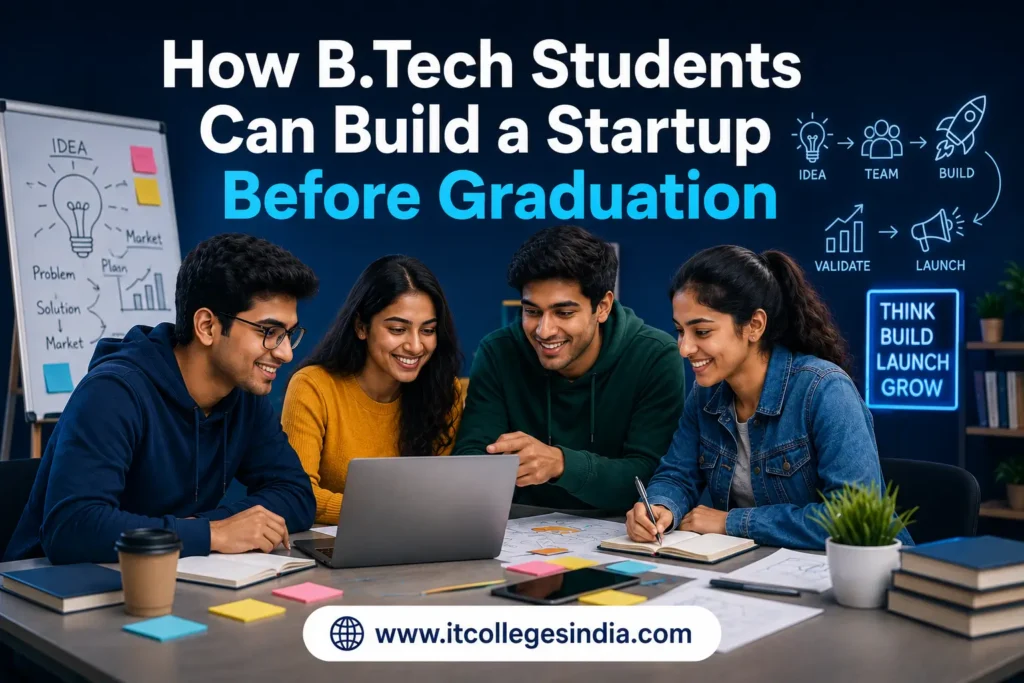

Starting a company during college is no longer a rare achievement. In 2026, thousands of B.Tech students are launching startups while still completing their engineering degrees. With the rise of Artificial Intelligence, cloud computing, digital marketing, e-commerce, SaaS platforms, and low-cost online tools, students can now build profitable businesses directly from their hostel rooms or college campuses.
Many successful startups began as student projects before turning into multi-million-dollar companies. Engineering students today have access to free learning resources, startup incubators, AI tools, cloud platforms, and global audiences through social media and the internet.
For students pursuing B.Tech in Computer Science, AIML, Data Science, IoT, Cybersecurity, ECE, Mechanical Engineering, or any other specialization, college is one of the best times to experiment with startup ideas.
This article explains how B.Tech students can build a startup before graduation, including idea validation, team building, funding, marketing, technology stacks, startup mistakes, and future opportunities.
Why College Is the Best Time to Start a Startup
Many students think they need years of experience or large investments to launch a startup. In reality, college offers several advantages for entrepreneurs.
1. Lower Financial Pressure
Students usually have fewer responsibilities compared to working professionals. This allows them to take risks and experiment with business ideas.
2. Access to Technical Skills
B.Tech students already learn programming, engineering, problem-solving, and technology fundamentals that are useful for startups.
3. College Networking Opportunities
Students can find:
- Co-founders
- Developers
- Designers
- Mentors
- Early users
inside their own campuses.
4. Startup Ecosystem Growth
Many colleges now offer:
- Startup incubators
- Innovation labs
- Entrepreneurship programs
- Funding competitions
This creates a supportive environment for student founders.
Step 1: Find a Real Problem to Solve
Successful startups solve real-world problems.
Instead of copying random business ideas, students should identify practical problems people face daily.
Good Startup Problems Often Come From:
- Student life
- Education
- Healthcare
- AI automation
- Small businesses
- E-commerce
- Transportation
- Cybersecurity
- Productivity tools
Questions to Ask
- What problem exists?
- Who faces this problem?
- How serious is the problem?
- Can technology solve it better?
The best startup ideas often solve problems founders personally experience.
Step 2: Choose the Right Startup Category
Technology students have multiple startup opportunities in 2026.
Popular Startup Categories for B.Tech Students
AI Startups
Examples:
- AI chatbots
- AI automation tools
- AI content platforms
- AI healthcare systems
AI startups are growing rapidly because businesses want intelligent automation solutions.
SaaS (Software as a Service)
SaaS businesses provide software through subscriptions.
Examples:
- Productivity tools
- CRM platforms
- Student management systems
- AI business tools
SaaS startups are scalable and profitable.
EdTech Startups
Education technology remains one of the biggest digital industries.
Examples:
- Online learning apps
- AI tutoring platforms
- Coding education tools
E-Commerce Brands
Students can launch:
- Clothing brands
- Custom merchandise
- Tech accessories
- Digital products
Many successful online brands started from college dorm rooms.
Cybersecurity Startups
Cybersecurity demand is growing rapidly because of increasing digital threats.
IoT and Smart Device Startups
Students interested in hardware can build:
- Smart home devices
- IoT monitoring systems
- Automation products
Step 3: Build a Small MVP (Minimum Viable Product)
Many students waste time building large products before testing demand.
Instead, startups should first create a simple MVP.
What Is an MVP?
An MVP is the simplest version of a product that solves the main problem.
Example
Instead of building a full AI platform, start with:
- A chatbot prototype
- A simple mobile app
- A landing page
- A basic web dashboard
Why MVPs Matter
MVPs help founders:
- Test ideas quickly
- Save money
- Collect feedback
- Improve products faster
Step 4: Learn Essential Startup Skills
Technical skills alone are not enough.
Student founders should also learn business and communication skills.
Important Skills for Student Entrepreneurs
Technical Skills
- Programming
- AI development
- Cloud computing
- UI/UX basics
- App development
Business Skills
- Marketing
- Sales
- Finance
- Negotiation
- Branding
Soft Skills
- Leadership
- Communication
- Networking
- Time management
The best founders combine technical and business understanding.
Step 5: Build the Right Team
Most successful startups are built by teams, not individuals.
Ideal Startup Team Roles
| Role | Responsibility |
|---|---|
| Technical Founder | Product development |
| Marketing Founder | Growth and branding |
| Operations Founder | Management and execution |
| Design Partner | UI/UX and product design |
Students can find co-founders through:
- College events
- Hackathons
- Startup communities
- Technical clubs
Choose team members who share similar goals and work ethics.
Step 6: Use Free and Low-Cost Tools
In 2026, students can build startups without huge investments.
Best Free Tools for Student Startups
Development Tools
- Python
- VS Code
- GitHub
- Google Colab
AI Tools
- ChatGPT
- Hugging Face
- TensorFlow
- LangChain
Design Tools
- Canva
- Figma
Website Builders
- WordPress
- Webflow
- Framer
Cloud Platforms
- AWS Free Tier
- Google Cloud credits
- Microsoft Azure student programs
These tools reduce startup costs significantly.
Step 7: Build an Online Presence Early
Many startups fail because nobody knows they exist.
Students should start marketing from day one.
Best Marketing Channels for Student Startups
Social Media
Platforms like Instagram, LinkedIn, X, and YouTube help startups grow audiences quickly.
Content Marketing
Writing blogs improves:
- SEO rankings
- Brand visibility
- Organic traffic
LinkedIn Branding
Founders who consistently share startup updates often attract opportunities and investors.
College Communities
Campus promotion is one of the easiest ways to gain early users.
Step 8: Learn SEO and AI Search Optimization
In 2026, search visibility is critical for startup growth.
Students should understand:
- SEO optimization
- Voice search
- AI-generated search results
- Keyword research
Good SEO helps startups attract free long-term traffic.
Step 9: Participate in Hackathons and Startup Competitions
Hackathons are excellent for startup growth.
Benefits
- Networking opportunities
- Industry exposure
- Team building
- Funding possibilities
- Mentorship access
Many student startups receive their first recognition through hackathons.
Step 10: Find Startup Funding Opportunities
Students often believe funding is impossible without experience.
However, many funding opportunities exist for student founders.
Sources of Startup Funding
College Incubators
Many universities provide:
- Seed funding
- Mentorship
- Office space
Government Startup Programs
India’s startup ecosystem offers multiple government support initiatives for entrepreneurs.
Angel Investors
Investors often support promising student-led startups.
Startup Competitions
Pitch competitions sometimes offer grants and funding support.
Common Startup Mistakes Students Should Avoid
1. Building Without Market Research
Always validate whether people actually need the product.
2. Focusing Only on Technology
A product without users or marketing cannot succeed.
3. Ignoring Customer Feedback
Early feedback is extremely valuable for improvement.
4. Trying to Build Everything Perfectly
Launch early and improve continuously.
5. Poor Team Selection
Bad partnerships can damage startup growth.
Best Startup Ideas for B.Tech Students in 2026
Here are some trending startup ideas.
AI-Based Learning Platforms
Personalized AI tutoring systems are growing rapidly.
AI Content Automation Tools
Businesses want AI-powered marketing solutions.
SaaS Productivity Platforms
Companies need workflow automation systems.
Cybersecurity Tools
Security-focused startups are becoming highly valuable.
Smart IoT Systems
IoT and automation startups are expanding globally.
AI Healthcare Applications
Healthcare technology continues growing rapidly.
How AI Is Helping Student Entrepreneurs
Artificial Intelligence is reducing startup barriers significantly.
Students can now use AI for:
- Content creation
- Coding assistance
- Logo design
- Marketing automation
- Customer support
- Data analysis
AI allows small student teams to compete with larger companies.
Time Management Tips for Student Founders
Balancing college and startups can be difficult.
Tips
- Focus on priorities
- Avoid unnecessary meetings
- Build consistent routines
- Delegate tasks
- Use productivity tools
Discipline is one of the biggest factors behind startup success.
Can Students Build a Successful Startup Without Coding?
Yes.
Students can still build startups through:
- Marketing
- Sales
- Operations
- Design
- Community building
Technical co-founders can handle development tasks.
Future of Student Startups Beyond 2026
Student entrepreneurship is expected to grow rapidly because of:
- AI automation
- Cloud platforms
- Global internet access
- Remote work
- Low startup costs
Young founders will continue building innovative businesses across industries.
Voice Search Optimized FAQs
Can B.Tech students start a startup before graduation?
Yes, many B.Tech students successfully launch startups during college using modern digital tools and online platforms.
Which startup is best for engineering students?
AI startups, SaaS platforms, EdTech businesses, cybersecurity tools, and e-commerce brands are popular startup options for engineering students.
How can students build startups with low investment?
Students can use free tools, cloud credits, AI platforms, and social media marketing to reduce startup costs.
Is coding necessary to build a startup?
No, coding is helpful but not mandatory. Students can partner with technical co-founders or focus on business roles.
What skills are important for student entrepreneurs?
Programming, marketing, communication, leadership, problem-solving, and business understanding are highly important.
Can college students get startup funding?
Yes, students can receive funding through incubators, competitions, angel investors, and government startup programs.
Conclusion
Building a startup before graduation is becoming increasingly realistic for B.Tech students in 2026. With access to AI tools, cloud computing, online learning resources, and digital marketing platforms, students can now launch scalable businesses from college campuses with minimal investment.
The most successful student founders focus on solving real problems, building MVPs quickly, learning continuously, and adapting based on user feedback. Technical skills combined with business understanding create powerful opportunities for innovation and entrepreneurship.
Whether students are interested in AI, SaaS, cybersecurity, IoT, e-commerce, or education technology, college provides the perfect environment to experiment, build, and grow startup ideas.
The future belongs to students who take action early, develop practical skills, and use technology to create real-world impact.
Also Read: How Generative AI Is Reshaping Engineering and Computer Degrees (2026 Guide)