Posted inB.Tech
Why Tier-3 B.Tech Students Are Winning Remote Tech Jobs (2026 Guide)

Introduction In 2026, the tech hiring landscape is no longer dominated only by IITs, NITs,…
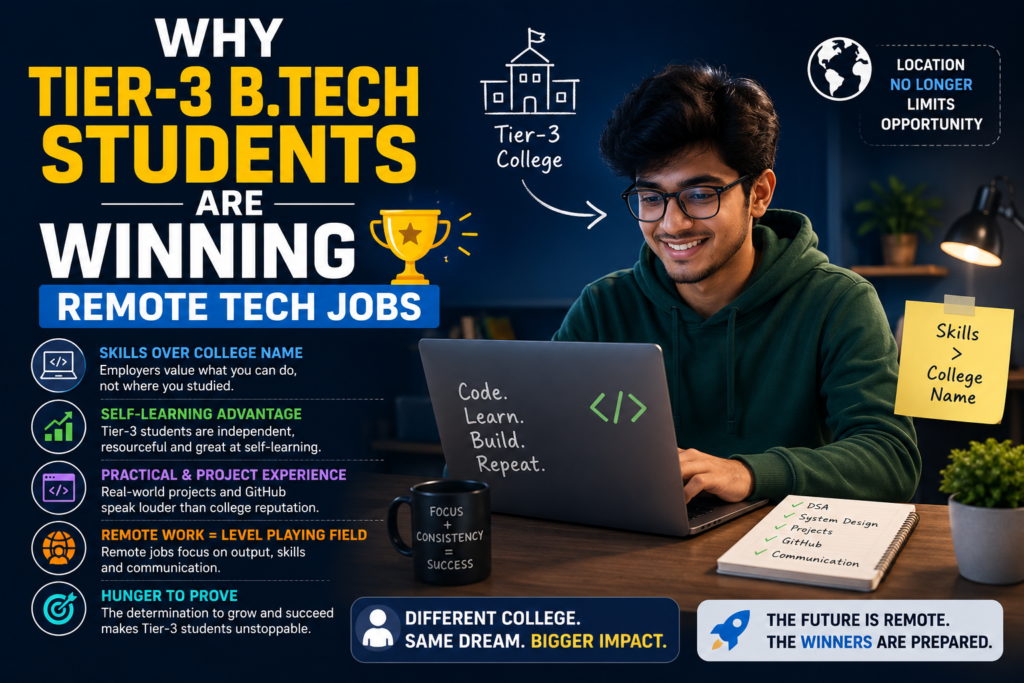
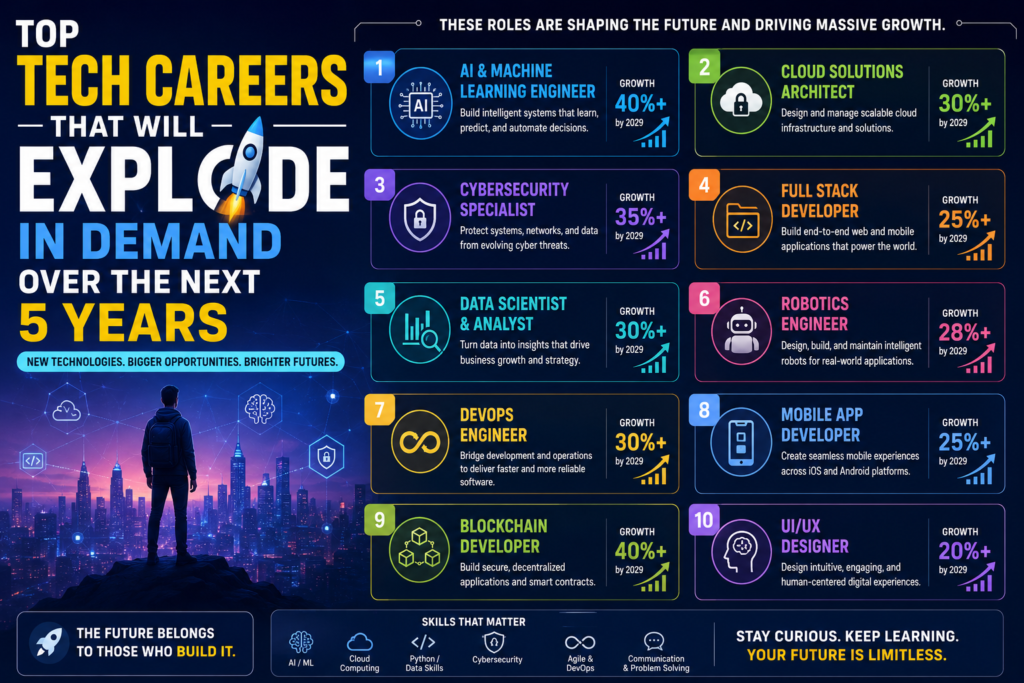
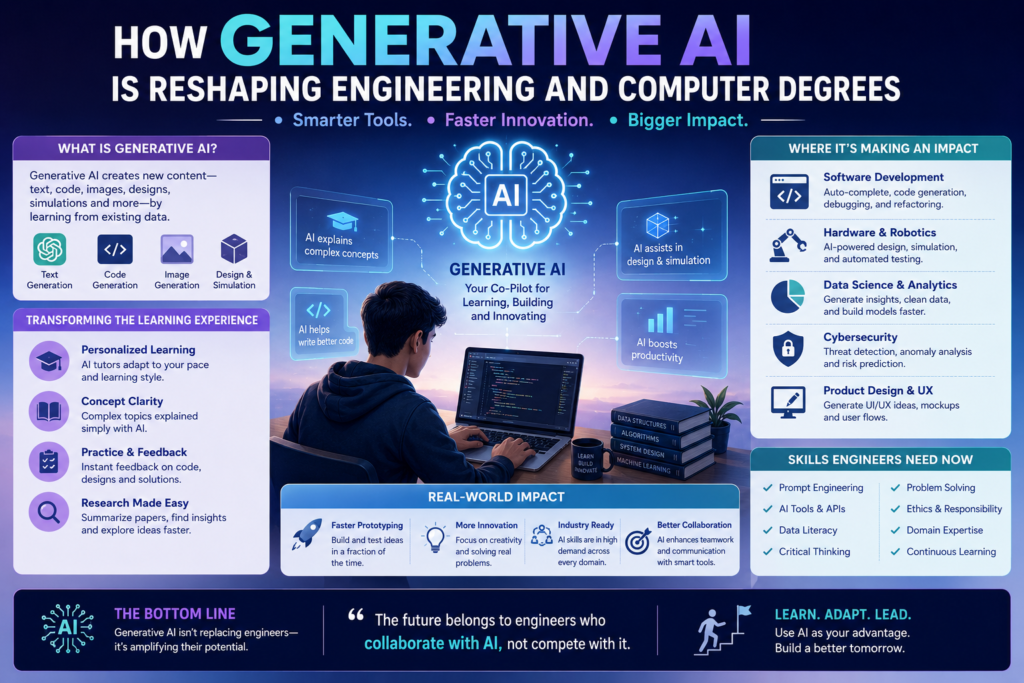
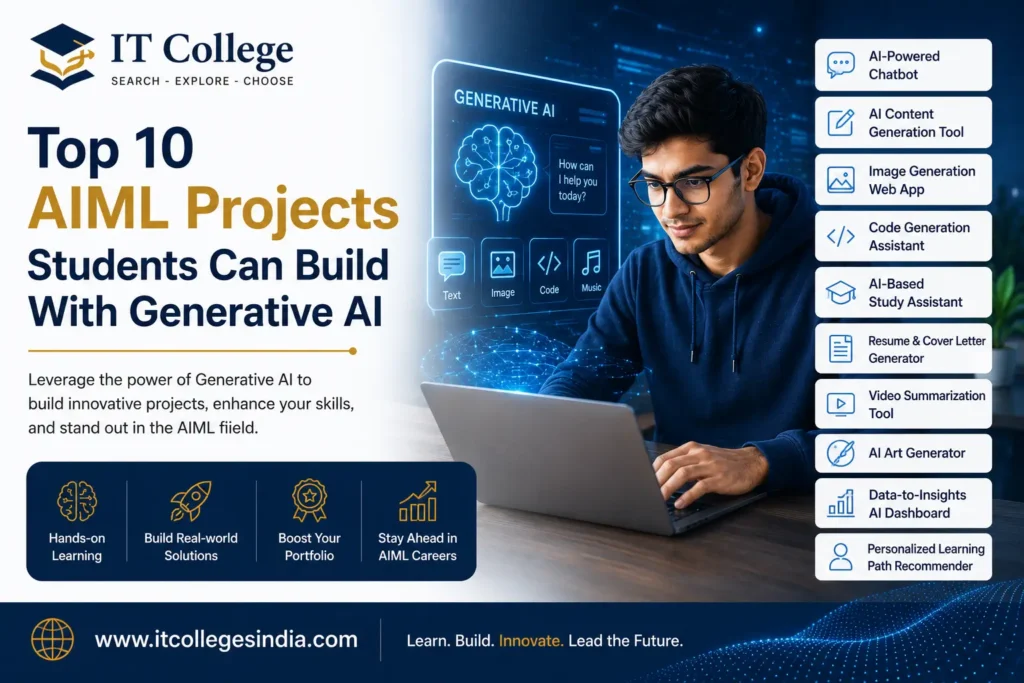
Artificial Intelligence and Machine Learning (AIML) are evolving rapidly, and Generative AI is now one of the most powerful technologies shaping the future of software development, automation, education, healthcare, and business. In 2026, students pursuing AIML, B.Tech, CSE, BCA, MCA, Data Science, IoT, and related courses are increasingly building innovative projects using Generative AI tools and large language models.
Generative AI allows machines to create content such as text, images, videos, code, audio, and even business strategies. Companies worldwide are searching for students who can build real-world AI applications instead of only learning theory.
If you are an AIML student looking to improve your resume, portfolio, internship opportunities, or placements, building practical Generative AI projects is one of the smartest career moves in 2026.
This article explores the top 10 AIML projects students can build with Generative AI, including project ideas, technologies, features, career benefits, and implementation tips.
Generative AI is a branch of artificial intelligence that creates new content using machine learning models trained on large datasets.
Examples include:
Popular Generative AI technologies include:
Students can use Generative AI to build intelligent applications with real-world value.
Generative AI projects help students:
Recruiters prefer students who can demonstrate working AI applications rather than only theoretical knowledge.
An AI-powered student assistant chatbot is one of the best beginner-to-intermediate Generative AI projects.
Build a chatbot that helps students with:
This project demonstrates skills in conversational AI, NLP, API integration, and AI workflow design.
An AI-powered resume generator is highly useful and attractive for recruiters.
Create a platform where users enter skills, education, and experience, and the AI automatically generates professional resumes and career recommendations.
This project combines AI, career technology, and automation, making it highly relevant for modern businesses.
Content creation is one of the biggest use cases of Generative AI.
Develop an AI tool that generates:
This project is excellent for students interested in AI marketing and business automation.
AI-generated images are transforming graphic design and digital marketing industries.
Build a web platform where users generate AI images using text prompts.
This project helps students enter fields such as computer vision, creative AI, and digital media technology.
Voice-based AI applications are growing rapidly in smart devices and automation systems.
Create an intelligent voice assistant capable of:
This project demonstrates advanced AI integration skills.
AI-powered coding tools are becoming essential in software development.
Build an AI coding assistant that can:
This project is highly impressive for software engineering and AIML placements.
Healthcare is one of the fastest-growing sectors for AI innovation.
Develop an AI system that analyzes symptoms and provides preliminary health recommendations.
This project should clearly mention that it provides suggestions, not professional medical diagnoses.
Education technology is rapidly adopting AI-powered personalized learning systems.
Build a platform that adapts learning materials based on student performance and interests.
This project demonstrates skills in educational AI systems and data-driven personalization.
With increasing misinformation online, fake news detection systems are highly valuable.
Create an AI tool that analyzes articles and predicts whether content is real or fake.
Cybersecurity, media companies, and social platforms need professionals skilled in AI moderation systems.
Businesses are using AI for data-driven decision-making.
Build an AI-powered dashboard that analyzes business data and generates insights automatically.
This project combines AI, business intelligence, and analytics — highly valuable skills in the corporate world.
Students should learn modern AI tools to build competitive projects.
Students should choose projects based on:
A project with real-world applications is more valuable than a basic academic project.
A good UI improves project presentation.
Real-world data makes projects more practical.
Deploying projects on cloud platforms shows professional-level skills.
Automation makes projects more advanced and useful.
Well-written documentation improves project credibility.
Students with Generative AI projects gain advantages during:
Recruiters often prioritize candidates with practical AI implementation experience.
AI models sometimes require powerful GPUs and cloud resources.
Finding clean datasets can be difficult.
Some AI APIs and cloud services have usage costs.
Students must continuously learn new AI tools and frameworks.
The future of Generative AI is expanding rapidly into:
Students who start building AI projects today will have strong career opportunities in the future.
AI chatbots, AI resume builders, AI coding assistants, and AI healthcare systems are among the best AIML projects in 2026.
Yes, Generative AI projects improve practical skills and increase placement opportunities in technology companies.
Python is the most popular programming language for AIML and Generative AI projects.
Yes, beginners can start with chatbot and content generation projects using AI APIs and open-source tools.
Students should learn Python, machine learning, NLP, APIs, deep learning, and cloud deployment.
Yes, practical AI projects improve resumes and help students secure internships and freelance opportunities.
Generative AI is transforming the future of AIML education and careers in 2026. Students who build practical AI projects gain valuable technical skills, improve their portfolios, and increase their chances of securing high-paying jobs and internships.
From AI chatbots and voice assistants to AI healthcare systems and business analytics dashboards, Generative AI offers endless possibilities for innovation.
The key to success is focusing on real-world problem-solving, learning modern AI technologies, and continuously improving technical skills. Students who start building Generative AI projects today will be better prepared for the next generation of AI-powered industries.
For AIML, B.Tech, BCA, MCA, CSE, IoT, and Data Science students, this is the ideal time to explore Generative AI and build projects that can shape the future of technology.
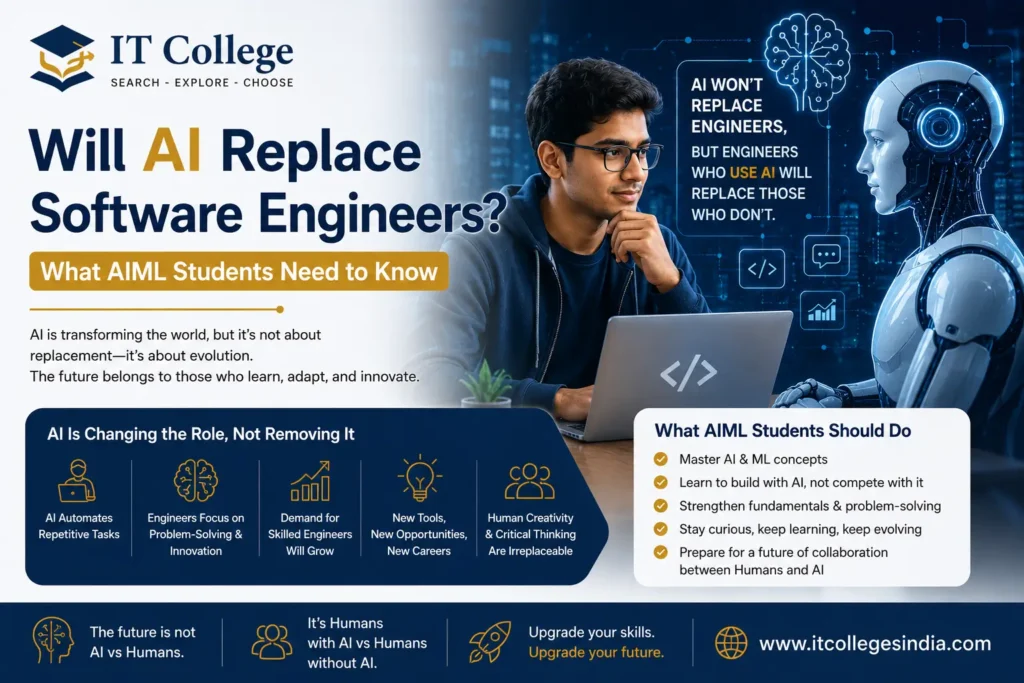
Artificial Intelligence is evolving faster than ever in 2026. From AI coding assistants and autonomous AI agents to generative AI tools capable of writing complete applications, the software industry is undergoing a massive transformation. As AI systems become more advanced, one question is dominating discussions among students, developers, and technology professionals:
Will AI replace software engineers?
For students pursuing Artificial Intelligence and Machine Learning (AIML), B.Tech, Computer Science Engineering (CSE), BCA, MCA, Data Science, and related courses, understanding the future of software engineering is extremely important.
The short answer is no — AI is not likely to completely replace software engineers. However, AI is changing how software engineers work, the skills companies demand, and the future career opportunities available in the technology industry.
This article explains how AI is impacting software engineering careers, which jobs are at risk, which new opportunities are emerging, and what AIML students need to learn to stay ahead in 2026 and beyond.
Artificial Intelligence has moved far beyond simple automation tools. Modern AI systems can now:
AI-powered coding assistants have become common in software development teams worldwide. These tools help developers complete tasks faster and improve productivity.
Generative AI models trained on billions of code samples can now understand programming languages, software structures, and development patterns with impressive accuracy.
As a result, many students fear that AI could eventually replace programmers and software engineers completely.
The fear surrounding AI replacement comes from the rapid advancement of generative AI tools.
In 2026, AI systems can:
Some AI tools can even create complete websites from simple text prompts.
This level of automation has raised concerns among students entering the technology field.
AI is transforming software development, but it is not removing the need for human engineers.
Instead, software engineering roles are evolving.
AI works best for repetitive, predictable, and pattern-based tasks. Human engineers remain essential for:
AI can assist developers, but it cannot fully replace human thinking, creativity, and decision-making.
The role of software engineers is shifting rapidly.
Here are the biggest changes happening in the industry.
AI-powered coding assistants are now common in development environments.
These tools help developers by:
This allows developers to focus on higher-level engineering tasks instead of repetitive work.
Students should learn how to work alongside AI tools rather than compete against them.
Understanding AI-assisted development is becoming a valuable industry skill.
Entry-level coding tasks are becoming increasingly automated.
Simple tasks such as:
can now be completed quickly using AI tools.
Students who only learn basic programming may struggle in the future job market.
Companies increasingly prefer engineers with advanced problem-solving and AI integration skills.
While basic coding tasks are becoming automated, demand for highly skilled engineers is increasing.
Companies need professionals who can:
This creates new opportunities for students with advanced technical skills.
AI is not only changing existing jobs but also creating entirely new career paths.
New roles include:
Students who understand both software engineering and AI technologies will have strong career advantages.
This is one of the most searched questions among students.
The reality is that AI will likely reduce demand for developers who only perform repetitive coding tasks.
However, junior developers who can:
will continue to have strong career opportunities.
The future belongs to adaptable developers, not just coders.
Despite rapid AI progress, human engineers remain essential for several reasons.
AI generates solutions based on existing patterns and training data.
Humans create entirely new ideas, products, and innovations.
Great software products require creativity, emotional understanding, and strategic thinking.
Software engineering involves understanding:
Human engineers collaborate with teams, clients, and stakeholders in ways AI cannot fully replicate.
AI-generated code can contain:
Human developers are needed to review, test, and optimize AI-generated solutions.
AI systems raise important concerns about:
Human oversight remains critical in software development and AI deployment.
Students must adapt to the changing technology landscape.
Here are the most important skills for future-ready software engineers.
AI knowledge is becoming essential for software engineers.
Students should learn:
Understanding AI technologies provides major career advantages.
Python is one of the most important programming languages for AI and software engineering.
It is widely used for:
Modern software systems run on cloud infrastructure.
Students should understand:
Cloud skills are highly valuable in AI-driven industries.
AI automation is becoming critical in modern businesses.
Students should learn tools related to:
Coding alone is no longer enough.
Companies want engineers who can:
Problem-solving is one of the most future-proof skills.
Practical projects help students stand out during placements and internships.
Useful projects include:
Projects demonstrate practical implementation skills.
AI is creating enormous career opportunities across industries.
Top career roles include:
| Career Role | Future Demand |
|---|---|
| AI Engineer | Very High |
| Machine Learning Engineer | High |
| Software Engineer with AI Skills | Very High |
| Prompt Engineer | Growing Rapidly |
| Data Scientist | High |
| AI Automation Specialist | Very High |
| Cloud AI Architect | Growing |
| Robotics AI Developer | Emerging |
| Cybersecurity AI Analyst | High |
Students who combine software engineering with AI expertise will remain highly employable.
AI adoption is increasing across almost every industry.
AI-powered diagnosis systems and healthcare automation are growing rapidly.
Banks use AI for fraud detection, analytics, and automation.
Online businesses use AI for personalization and recommendation systems.
AI helps companies detect threats and automate security monitoring.
AI-powered personalized learning platforms are transforming online education.
Modern AI systems can generate simple applications and prototypes.
However, large-scale enterprise software still requires human engineers for:
AI tools work best as assistants rather than independent developers.
Software engineering will continue evolving alongside AI technologies.
Future trends include:
Developers who adapt to these trends will thrive in the future job market.
Practical implementation matters more than memorization.
Students who avoid learning AI may struggle in future job markets.
AI should assist learning, not replace understanding.
System architecture knowledge remains highly valuable.
AI will automate some coding tasks, but software engineers will still be needed for creativity, architecture, problem-solving, and business understanding.
Yes, software engineering remains a strong career, especially for professionals with AI and cloud computing skills.
Students should learn Python, machine learning, cloud computing, AI automation, system design, and problem-solving.
AI can generate code and simple applications, but human engineers are still required for complex systems, security, and optimization.
AI coding tools are not dangerous if developers learn how to use them effectively as productivity assistants.
Roles involving creativity, strategic thinking, leadership, AI architecture, cybersecurity, and advanced engineering are less likely to be fully automated.
Artificial Intelligence is reshaping software engineering in 2026, but it is not completely replacing software engineers. Instead, AI is changing the skills, workflows, and opportunities available in the technology industry.
Basic repetitive coding tasks are becoming automated, while demand for highly skilled engineers with AI expertise continues to grow. Students who learn machine learning, cloud computing, AI automation, and advanced software engineering concepts will remain highly valuable in the future job market.
For AIML, B.Tech, CSE, MCA, BCA, Data Science, and IoT students, the future is full of opportunities. The key is to adapt, continuously learn new technologies, build practical projects, and develop strong problem-solving abilities.
The future of software engineering is not humans versus AI. It is humans working with AI to create smarter, faster, and more innovative technology solutions.